
This is Money Snake. She only appears every 312 years.
If you reblog her picture within the next twenty-five seconds you will have good luck and fortune for the rest of your life.
This is Money Snake. She only appears every 312 years.
If you reblog her picture within the next twenty-five seconds you will have good luck and fortune for the rest of your life.
My only relief is to sleep. When I’m sleeping, I’m not sad, I’m not angry, I’m not lonely, I’m nothing.
+ BONUS I will try making pickup lines that match your main fandom (If I can think of one)

So calming
If you have anxiety trying taking deep breaths in sync with this. It’s very relaxing.
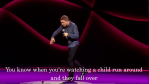


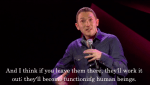


This is so accurate. At school, we literally have children who will watch our facial expressions to see if them falling is as bad as they think it might be.



Cuba is my Homeland
As academics, we never set out to do a video; it’s not what we do. At the same, while interviewing older Cuban Americans about their experience of leaving the homeland, it occurred to us that their stories were dying with them, remaining untold. Still, beyond reporting their stories in academic journals and orally, we did not know how else to capture their experiences. Moved by what she heard, Rose M. Perez shared the stories with anyone who would listen—without revealing their identities, of course. After Jose Vega Pérez, a talented Panamanian filmmaker, heard Rose talk about her work, he was inspired and encouraged us to embark on this venture.
The grief that Cubans experienced after leaving Cuba has persisted throughout their lives. As such, it resonates with ambiguous loss theory, originated by Dr. Pauline Boss. In her research on Cuban Americans, Rose has connected the case of Cubans to this theory. This film aims to educate the public regarding the unique experiences of Cuban Americans and how they cope with ambiguous loss from leaving their homeland.Hours of footage later, we are ready to preview the film thus far, hoping that you are moved to financially contribute to this effort in any way you can. This documentary captures the experiences of early Cuban refugees, whose “temporary” stay in the United States became permanent and whose memories and emotions are as vivid today as the day they left and, about more recent arrivals that never knew the island the older Cubans mourn. Ironically, despite rarely talking about their stories, as they are so painful, the memories and emotions are as vivid as if they were yesterday. This film also tells the story of exceptional, resilient, brave individuals whom despite trauma and profound loss, made a life in the United States, the country they feel a great deal of gratitude for.


 Just me,myself and I